Our cows produce two main products: high-quality milk and manure. As part of our closed-loop system, we are able to convert that manure into renewable natural gas (RNG) as well as fertilizer for our crops.
Here’s how it works:
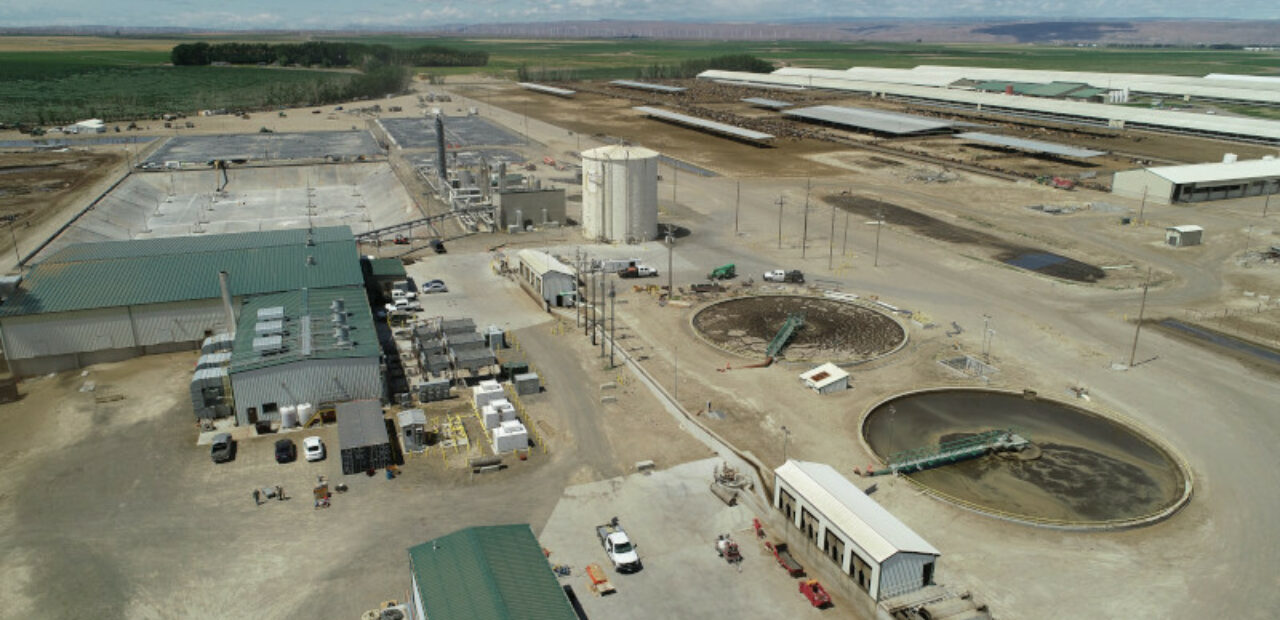
A flushing system carries animal waste from our free-stall barns to our state-of-the-art methane digester. The process starts with anaerobic bacteria breaking down the organic material, which creates biogas. The biogas is then sent to a cleaning system, which removes impurities such as carbon dioxide. After this step, the remaining biogas is RNG, which is compressed for storage and transportation. RNG is now ready to be transported via pipeline for use as an alternative fuel for transportation or to heat homes and businesses, which reduces reliance on fossil fuels and traditional natural gas.
The digester does even more than provide carbon-negative energy. It also produces nutrient-rich natural fertilizer used to enrich the soil for our organic and feed crops. Solid material is removed and used to create clean bedding for our cows.
Through this process, the digester sequesters over 152,000 metric tons of CO2 per year. This is equivalent to the annual greenhouse gas emissions from 35,558 passenger vehicles, or CO2 emissions from 20,472 homes’ energy consumption, or carbon sequestration by 152,907 acres of forest land.
The sum total of crop plantings, farming practices, and digester sequestration makes Threemile a significant contributor in helping Oregon move toward a lower carbon-emitting future and allows us to offset pollution by localizing much of our supply chain.